Blog Entry 5:
Hellooo everyone!! It's been awhile since my last blog. Today, I'll be covering on what I've learned from both week 11 and 12.
Week 11: Material for Design
In this week, Dr Noel taught us on a lesson called "Materials For Design" in short, it's called MFD. The first thing that went across my mind when I hear this name was that, isn't this the module that was taught when we were in year 1??? it sounded so familiar and unfamiliar at the same time as I've forgotten some of the concept that was taught to me in year 1😅. Welpp... I guess I shall take this lesson an opportunity to recall back some of the content that I've forgotten.
Let's recap on the different stages of a product design process:
We are currently at the 4th stage which is the "Prototyping & Product Development".
1st stage: Needs Identification
2nd stage: Ideation
3rd stage : Selection
4th stage : Prototyping & Product Development
It is important to learn how to choose the right material as there are hundreds and thousands of materials for us to choose from and it is impossible for us to go and test out each material one by one to see which is the best and most suitable one for the product. Thus it is very important to choose the right material for product design. Choosing the right material can also help the company to cut down the cost needed.
There are some material properties that engineers might look out for are:
- Mechanical properties
- Thermal properties
- Magnetic properties
- Fabrication properties
- Environmental properties
So after understanding the product requirements and material attributes, the next step is to do the COWS matrix to identify the suitable material for the product design.
There are 3 steps to material selection process:
Step 1: Define material requirement for the design
Step 2: Select and evaluate candidate materials (COWS)
Step 3: Choose the most economical material.
By looking at the first two steps, I could recall back on how COWS matrix is like but, when I saw the "economical" word in step 3, I went blur for a moment as I thought this was new to us. But thinking back, and relating to the cost of material that I've been using it in year 1, the last step is no longer new to me.
Next, each group was assigned to complete a COWS matrix on a certain product. My group were tasked to complete a COWS matrix on the inner part of the thermal flask and also the cap of the thermal flask so as to choose the most economical material for both inner part and cap of the thermal flask and this activity will be part of our CA2 report.
Here is how we did our COWS matrix and eventually came out with the most economical material for both the inner layer and cap of the thermal flask:
CAP of Thermal Flask:
Step 1: First, what we did was to define the material requirements for the cap of the thermal flask.
Cap of thermal flask
Functions | Contain and prevent liquid from spilling out |
Constraints | Water resistant Corrosion resistant Chemical resistant Not reactive with food ingredients (inert) Withstand high/low temperatures Low thermal conductivity |
Objectives | Minimise thermal conductivity so that the cover will not burn mouth when hot liquid is stored |
Step 2: Next, we need to select and evaluate candidate material for the cap of the thermal flask by using COWS matrix method.
Rational of the criterion made for the cap of thermal flask:
Criteria | Weightage (%) | Explanation |
Resistance to corrosion by water | 20 | Cover should be resistant to corrosion by water so that when it comes into contact with water, it will not corrode and still remain usable. Thus, it is placed at 15% as it is relatively important that the thermos flask be reusable and safe to use |
Resistance to chemicals | 20 | Cover should be resistant to chemicals so that when it comes into contact with chemicals during washing, it will not corrode and still remain usable. Thus, it is placed at 15% as it is relatively important that the thermos flask be reusable and safe to use |
Density | 5 | Cover should be light so that it is easier to carry around, however since the stainless steel outer cover of thermos flasks already contribute to most of the bottle’s weight, it is not as important as the other criterias. |
Melting Point | 25 | Material should be able to contain liquids at high temperatures without melting and contaminating the liquid, thus it is important that the cover does not melt when it comes into contact with hot liquids. |
Thermal conductivity | 15 | The cover should have low thermal conductivity so that there is a lower rate of heat transfer from the hot water to the cover, so as to prevent the cover from being too hot and burning the consumer’s mouth. Thus it is less important as fewer people drink straight from the thermos flask opening |
Food grade | 15 | The cover should be able to store foods that may be acidic (coffee/coke) and prevent the transfer of non-food chemicals into the liquid, which may be hazardous to the human body. Thus it is relatively important that the user does not get any food–poisoning |
COWS matrix for the cap:
|
| Options |
Criteria (Units) | Weightage (%) | Polypropylene (PP) | Polyethylene terephthalate (PTE) | Polyether ether Ketone (PEEK) | Polyphenylene sulfide (PPS) |
Resistance to corrosion by water | 20 | Excellent Score: 3 | Excellent Score: 3 | Excellent Score: 3 | Excellent Score: 3 |
Resistance to chemicals | 20 | Excellent Score: 3 | Excellent Score: 3 | Excellent Score: 3 | Excellent Score: 3 |
Low Density (g/cm3) | 5 | 0.91 Score: 3 | 1.38 Score: 1 | 1.3-1.35 Score: 2 | 1.35 Score: 2 |
Low Thermal conductivity (W/m.K) | 15 | 0.1 - 0.2 Score: 3 | 0.15 - 0.24 Score: 2 | 0.25-0.29 Score: 1 | 0.29 - 0.32 Score: 1 |
High Melting Point (0c) | 25 | 130 Score: 1 | 260 Score: 2 | 340-345 Score: 3 | 280 Score: 2 |
Food Grade | 15 | Food-safe Score: 3 | Food safe Score: 3 | Food safe Score: 3 | Food safe Score: 3 |
Score | 100 | 250 | 250 | 265 | 240 |
Step 3: Choose the most economical material
|
| Options |
Criteria (Units) | Weightage (%) | Polypropylene (PP) | Polyethylene terephthalate (PET) | PolyetheretherKetone (PEEK) | Polyphenylene sulfide (PPS) |
Cost of material | 60 | Excellent Score: 3 Sgd $1.13/kg | Excellent Score: 3 Sgd $1.01/kg | Poor Score: 1 Sgd $450/kg | Average Score: 2 Sgd $10.18/kg |
Ease of handling/ manufacturing | 40 | Excellent Score: 3 | Average Score: 2 | Poor Score: 1 | Excellent Score: 3 |
Total score | 100 | 300 | 260 | 100 | 240 |
Therefore, since Polypropylene (PP) has the highest score of 300, the most economical material selected is Polypropylene.
INNER LAYER of Thermal Flask:
Step 1: We defined the material requirements for the inner layer of the thermal flask.
Inner Layer
Functions | Contain hot/cold liquid and reduce temperature change |
Constraints | Water resistant Not reactive with food ingredients (inert) Withstand high/low temperatures Low thermal conductivity Low thermal expansion coefficient Corrosion resistant Chemical resistant High machinability |
Objectives | Minimise thermal conductivity to reduce as much heat loss as possible |
Step 2: Next, we need to select and evaluate candidate material for the inner layer of the thermal flask by using COWS matrix method.
Criteria | Weightage (%) | Explanation |
Resistance to corrosion by water | 15 | Inner layer should be resistant to corrosion by water so that when it comes into contact with water, it will not corrode and still remain usable. Thus, it is placed at 20% as it is relatively important that the thermos flask be reusable and safe to use |
Resistance to chemicals | 15 | Inner should be resistant to chemicals so that when it comes into contact with chemicals during washing, it will not corrode and still remain usable. Thus, it is placed at 20% as it is relatively important that the thermos flask be reusable and safe to use |
Melting Point | 20 | Material should be able to contain liquids at high temperatures without melting, thus it is important that the inner layer does not melt when it comes into contact with hot liquids. |
Thermal conductivity | 25 | It is very important that the inner layer has low thermal conductivity. Since the main function of a thermoflask is to maintain the temperature of the liquid contained, a material of low thermal conductivity should be preferred as it reduce the rate of heat transfer from the liquid to the surroundings |
Thermal Expansion Coefficient | 15 | It is relatively important that the inner layer does not expand too much when it comes into contact with hot liquids and vice versa for cold liquid to prevent thermal shock. |
Food grade | 10 | The inner layer will be constantly in contact with various types of liquids and possibly food, hence the material should be of decent food grade to ensure the quality of the food, which ensures the health of the user. Thus it is least important as most of the materials for inner layers are of acceptable food grade |
COWS matrix for the inner layer of the flask:
|
| Options |
Criteria (Units) | Weightage | Borosilicate Glass | PolyetheretherKetone (PEEK) | Fibreglass | Polytetrafluoro ethylene (PTFE) |
Resistance to corrosion by water | 15 | Excellent Score: 3 | Excellent Score: 3 | Excellent Score: 3
| Excellent Score: 3 |
Resistance to chemicals | 15 | Excellent Score: 3 | Excellent Score: 3 | Excellent Score: 3 | Good Score: 2 |
High Melting Point (0c) | 20 | 1252 Score: 3 | 340 - 345 Score: 1 | 1135 Score: 3 | 327 Score: 1 |
Low Thermal Conductivity (W/m·K) | 25 | 1.15 Score: 1 | 0.25-0.29 Score: 2 | 0.04 Score: 3 | 0.220 - 0.320 Score: 2 |
Thermal Expansion Coefficient (m/0c) | 15 | 3.2 x 10⁻⁶ Score: 2 | 4.5-5.5 x 10⁻⁷ Score: 3 | 5.4 x 10⁻⁴ Score: 1
| 1.2 - 1.7 x 10⁻⁴ Score: 1 |
Food Grade | 10 | Food Safe Score: 3 | Food safe Score: 3 | Food safe Score: 3 | Food safe Score: 3 |
Score | 100 | 235 | 235 | 270 | 190 |
Step 3: Choose the most Economical material for the inner layer of the thermal flask
|
| Options |
Criteria (Units) | Weightage (%) | Borosilicate Glass | PolyetheretherKetone (PEEK) | Fibreglass | Polytetrafluoro ethylene (PTFE) |
Cost of material | 60 | Excellent Score: 3 Sgd $8/kg | Poor Score: 1 Sgd $450/kg | Excellent Score: 3 Sgd $0.96/kg | Average Score: 2 Sgd $34.84/kg |
Ease of handling/ manufacturing | 40 | Average Score: 2 | Poor Score: 1 | Excellent Score: 3 | Poor Score: 1 |
Total score | 100 | 260 | 100 | 300 | 160 |
Since Fibreglass have the highest score of 300, the most economical material selected for the inner layer of the thermal flask material is Fibreglass.
Overall, i feel that this lesson is very meaningful as I get to recall back on how to do a material selection using a COWS matrix method which this is quite an important skills to have in the future when we are out in the workforce.
Week 12: Design for Materials
For this lesson, we learned about design for materials where it is a bit different form material selection. Material selection is where we know the product and choose the material based on the property attributes and the functionality by using COWS. However, design for material is more like choosing the material first and see what product can be made out from that material chosen.
Moving on, we were tasked to select one material from the resources given in topic 6 slides or from any other sources and complete an activity which is part of our CA2 report.
I remembered my group went to the first level of the library where there is a corner that display different types of materials. When we were in the library, we get to touch and feel the material. After looking through the displays, we chose Netlon as it is durable, flexible, strong and protective.
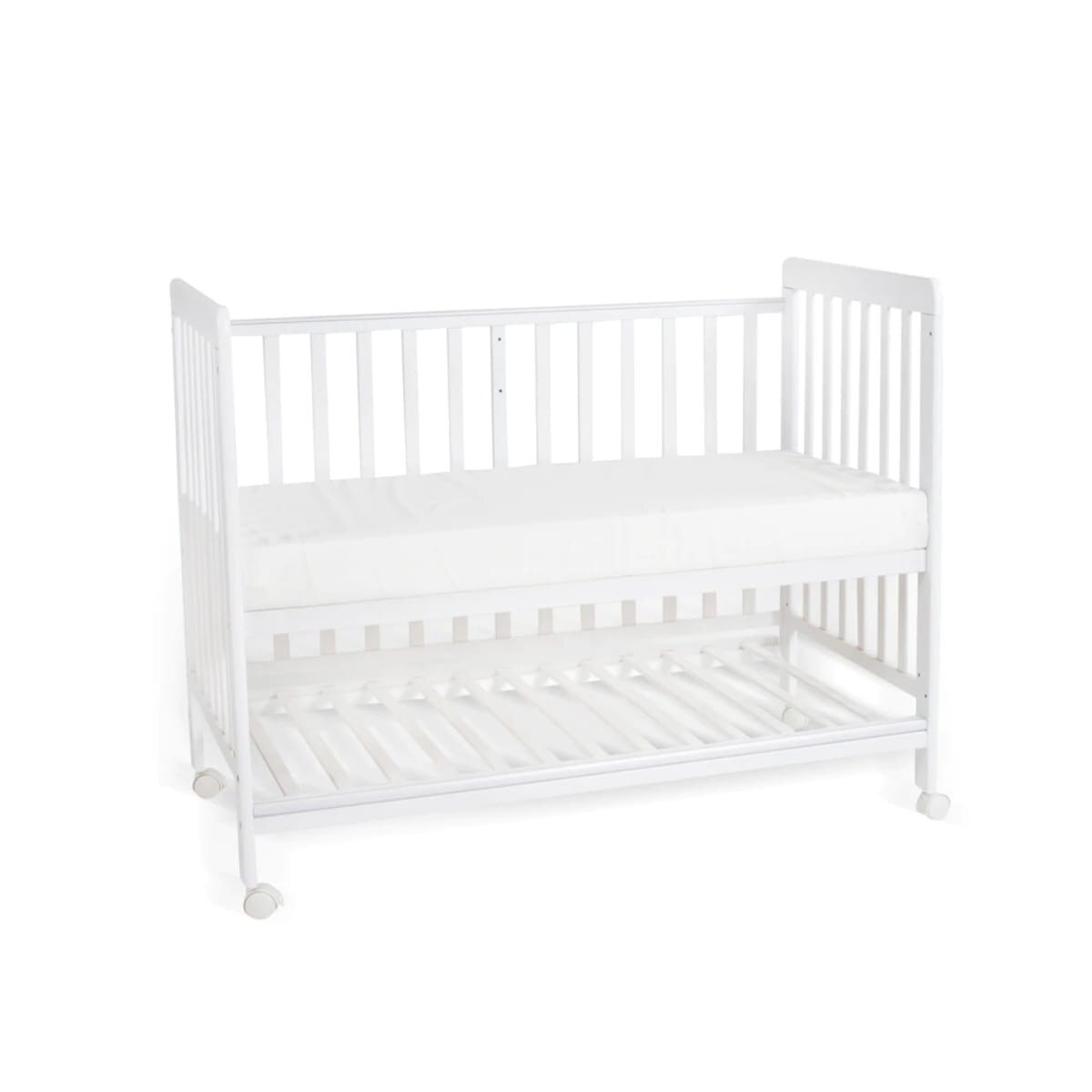
The chemical product that we decided to replace the material with is the barricade of a baby cot.
The purpose of the barricade of the baby cot is to protect the baby from falling if they crawls or roll down the bed. Since the barricade of the baby's cot is usually hard and stiff, Netlon can be a better choice in terms of not hurting the baby when they crawls into the barricade or crawl throughs the gap. By replacing the barricade with Netlon, it can bend and stretch to a certain extent to protect the baby while retaining its main purpose which is to be strong and durable, and prevent the baby from coming out of the cot.
In terms of how Netlon can be used to enhance the functionality of the barricade of the baby cot, in my opinion, Netlon offers some flexibility to protect the baby if it falls on the barricade or crawls into it, so the baby will bounce back quickly. By having smaller holes, it prevents the baby from slipping in-between and escaping, enhancing safety and keeping air flow high.
Sustainable design is also very important. When designing for a product, we have to think about whether if the product is sustainable, recyclable or biodegradable. For part 3 of the CA2 report, we've considered modifying our design of the odour absorber in a way that allows closing when not in use. We decided to modify it by adding a sliding function to close the cover when the device is not in use. This will reduce the amount of time the gel is exposed to air, which increases the product life span of the gel. When the gel is able to last longer, it will prolong the use of the device, which reduces the overall amount of materials used to produce the device, as the user do not have to replace the device as frequently.
Above is everything on what I've learned in week 11 & 12. Thank you for reading my blog, I hope you guys enjoyed reading it :) See you guys soon on my next blog!👋


Comments
Post a Comment